SEO in the Age of Google AI Overviews: How to Protect Your Site’s Traffic and Rankings
Introduction Google’s new AI-generated summaries—branded AI Overviews and (during testing) Search Generative Experience (SGE)—are changing the familiar “ten blue links” forever. When a query triggers an Overview, a…
By Fabonic Admin
Introduction
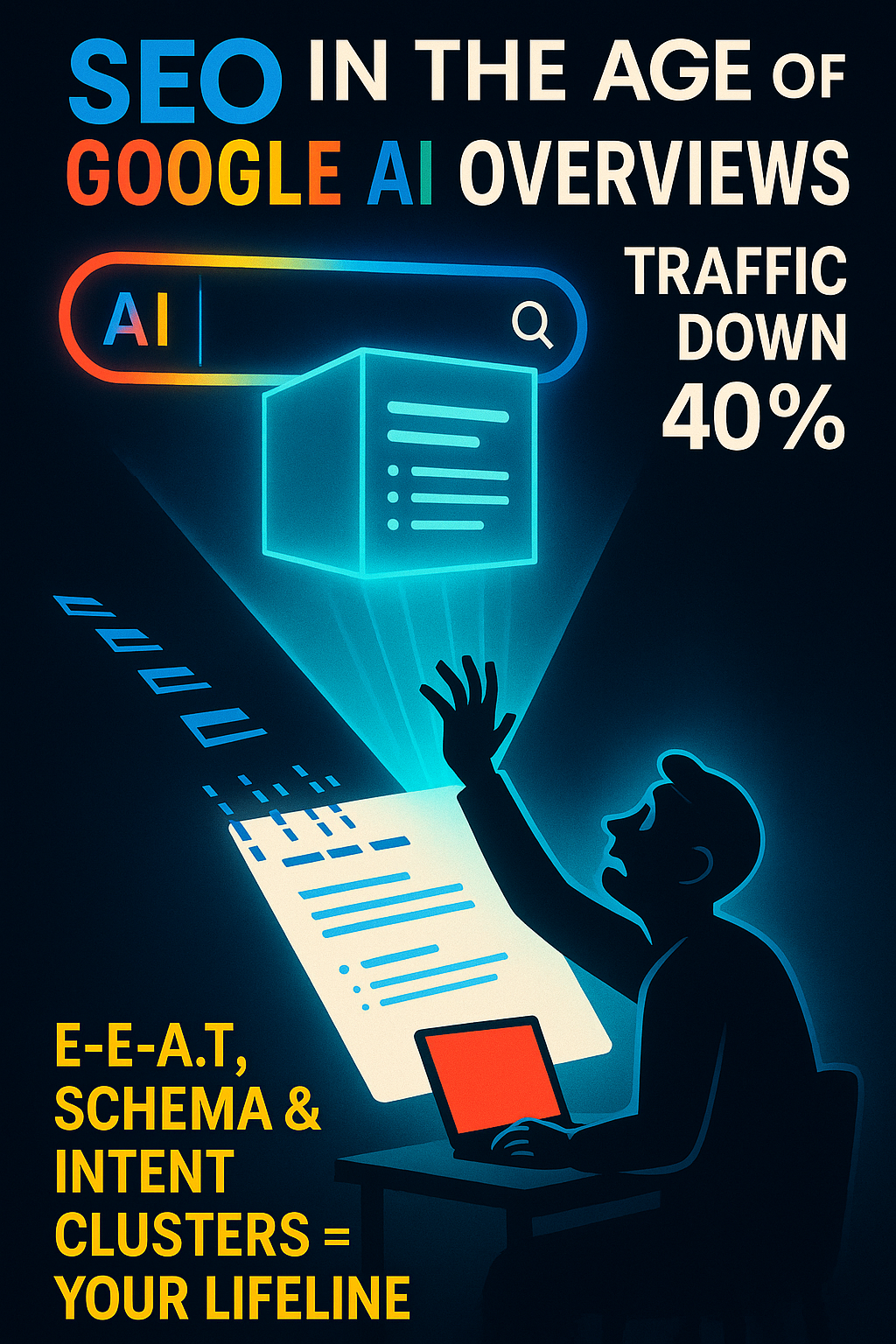
Google’s new AI-generated summaries—branded AI Overviews and (during testing) Search Generative Experience (SGE)—are changing the familiar “ten blue links” forever. When a query triggers an Overview, a large AI snapshot appears at the top of the results page, pushing traditional organic listings far below the fold. Early data shows that this single interface change can slash click-through-rates (CTR) for affected pages, forcing publishers and businesses to rethink search-engine optimisation from the ground up.
What Are Google AI Overviews?
AI Overviews use Google’s Gemini model to knit together facts, instructions, images and product data into a concise answer box, followed by citations and “Follow-up questions.” The feature rolled out to all U.S. users in May 2024 and is expected to reach a billion users worldwide by the end of 2025.
Impact on Organic Traffic
-
Traffic declines are real. Multiple industry studies report organic traffic drops between 18 % and 64 % on queries that now surface an AI Overview—especially informational and news keywords.
- Visibility is now below the fold. The average Overview block is tall enough that users must scroll past an entire screen before they see the first traditional result, sharply reducing impressions and clicks.
- But there’s upside if you’re cited. Google claims links chosen as “sources” inside an Overview receive more clicks than they would as plain listings, because the snapshot highlights them as authoritative.
- Prevalence is climbing. As of March 2025, AI Overviews appear on 10.4 % of U.S. desktop queries and are rising fastest on mobile (-119 % YoY).
Rethinking Keyword Strategy
-
Shift from single keywords to intent clusters. Users can ask broad, conversational questions and let follow-up prompts refine the topic, so your content must cover entire themes—not isolated phrases.
- Prioritise “click-potential” terms. If the AI can fully satisfy a query in two lines (e.g., “What’s the capital of France?”), ranking for it may no longer drive visits. Focus on nuanced or transactional searches where users still need a deep dive, comparison, or tool.
- Optimise for natural-language questions. Include FAQ glossaries, headings in Q-form, and conversational phrasing so the model can lift precise, well-structured sentences from your page.
Ranking Factors in the AI Era
-
Top-10 ranking still matters. Over 99 % of Overview citations now come from the first-page (top 10) results, so classic technical and on-page SEO remain prerequisites.
- E-E-A-T is critical. Google’s Helpful Content and anti-spam updates explicitly reward first-hand expertise and downgrade low-value AI-generated filler. Demonstrable Experience, Expertise, Authority and Trust are table stakes for inclusion.
- Multimodal assets broaden reach. Overviews can embed images or video thumbnails; well-optimised alt text, schema and transcripts give the AI additional reasons to feature your media.
Actionable SEO Tactics for 2025
| Tactic | Why It Works in AI Overviews |
|---|---|
| Add structured data (schema). | Product, FAQ, Article and LocalBusiness markup feed Google’s Shopping Graph and Knowledge Graph—key data sources for AI snapshots. |
| Strengthen author credibility. | Bios, credentials, citations and external reviews enhance E-E-A-T signals the model uses to pick trustworthy snippets. |
| Publish multimedia guides. | Original images or short videos give Google assets it can display beside the Overview and entice clicks. |
| Earn third-party mentions. | Being recommended in reputable “best-of” or review articles means you may surface indirectly when an Overview cites those pages. |
| Monitor SGE impact in Search Console. | Segment queries now triggering Overviews, track CTR drops, and re-optimise pages or title tags where visibility falls. |
| Create interactive or personalised tools. | Calculators, configurators or custom check-lists provide value beyond what a one-shot AI answer can give, motivating users to click through. |
Conclusion
Google’s AI Overviews are not a passing experiment—they mark a fundamental rewrite of the search results page. Expect lower traffic for quick-answer queries, but remember: the same AI that threatens clicks can spotlight authoritative brands. Double-down on E-E-A-T, structured data, and holistic intent coverage, and your content can still win—this time inside the AI snapshot, not just below it.